What kind of steel is more suitable for salt tablet press punch & die?s
what kind of steel is suitable to be used for salt tablet press dies?
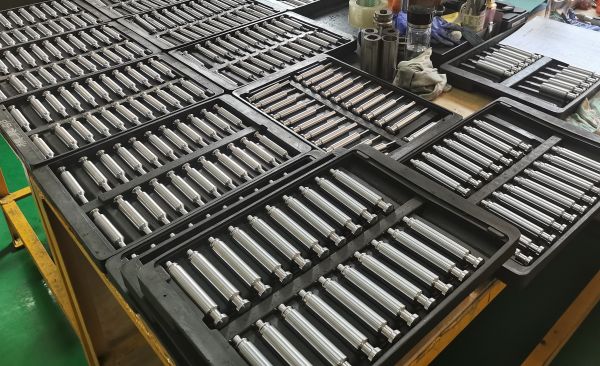
For salt tablet press dies, the die material selection is more demanding than for normal pharmaceutical tablets because pure salt (NaCl) is highly corrosive, especially under pressure and at elevated temperature. Based on below conditions:
Material: pure salt (water softener salt tablets)
Temperature: ~60 °C
Tablet size: Ø25 mm
Tablet height: 19 mm
Convex height: 2.5 mm each side
Compression force: ~40 kN
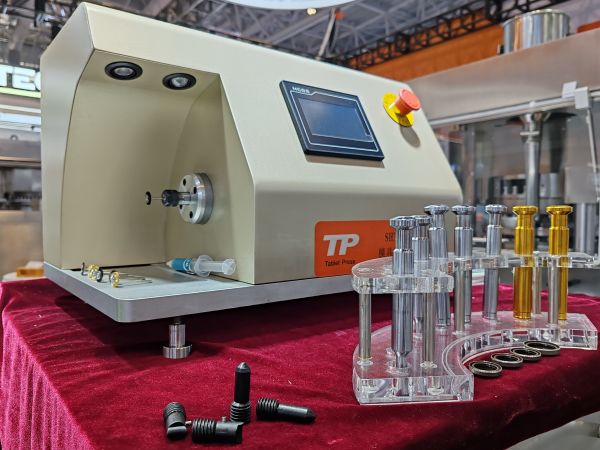
Punch: S7
-Current die material consideration: M340
-The die needs a combination of:
-High corrosion resistance
-High compressive strength
-High wear resistance
-Good toughness (avoid cracking/chipping)
| Material | Type | Hardness after heat treatment | Corrosion resistance | Suitability for salt tablets |
|---|---|---|---|---|
| Böhler M340 (1.4116 modified) | Stainless tool steel | 58–60 HRC | ★★★★★ | Excellent |
| Böhler M390 | Powder stainless tool steel | 60–62 HRC | ★★★★★ | Excellent, premium |
| Uddeholm Elmax | Powder stainless tool steel | 58–60 HRC | ★★★★★ | Excellent |
| S440 / SUS440C | Stainless tool steel | 58–60 HRC | ★★★★ | Good |
| D2 (1.2379) | Cold work tool steel | 58–62 HRC | ★★ | Not recommended long-term |
| DC53 | High toughness tool steel | 60–62 HRC | ★★ | Wear OK, corrosion poor |
| S7 | Shock tool steel | 54–58 HRC | ★ | Better for punches than dies |
1. M340 — very suitable for pure salt tablet press dies, Böhler M340 die material is recommeded.
Advantages:
-Chromium stainless steel (~17% Cr)
-Good resistance against chloride corrosion from NaCl
-High hardness (normally 58–60 HRC)
-Better toughness than M390
-Easier machining than powder steels
-Good surface finish after polishing
For salt tablets, the die wall is exposed to:
-salt pressure
-friction during ejection
-moisture from salt
-chloride ions
M340 handles this much better than D2.
A typical specification:
Die material: Böhler M340 ISOBLOC
Heat treatment:
-Vacuum hardening
-Tempering: 2–3 times
-Hardness: 58–60 HRC
-Surface finish: Ra ≤0.2 μm
2. M390 — if you need maximum lifetime
M390 has:
*~20% Cr
*powder metallurgy structure
*very high wear resistance
*excellent corrosion resistance
*It can last longer than M340.
However:
*More expensive
*More difficult machining
*More brittle
*For a salt press running continuously at high production rates, M390 is attractive.
3. Why should you avoid D2 for salt tablet press dies
D2 is very popular for tablet tooling because it has:
excellent wear resistance
-high hardness
-good dimensional stability
But D2 contains only about 12% chromium and is not truly stainless.
With salt:
-NaCl + moisture → chloride corrosion
Typical problems:
-rust spots inside die bore
-rough die wall
-increased ejection force
-tablet sticking
-shorter tooling life
-A D2 die may work initially, but maintenance cost increases.
Recommended combination for salt tablet press machines' punches and dies
For Ø25 mm × 19 mm salt tablets:
Option A (balanced choice)
-Punches: S7
-Dies: M340
Hardness:
-Punch: 54–58 HRC
-Die: 58–60 HRC
This is what I would recommend.
Why S7 is usually better for punches
The punch in a tablet press is mainly subjected to:
*High compression load
*Repeated impact from pressure rollers
*Fatigue stress during millions of cycles
*Bending stress at the punch tip
S7 was designed for shock loading. It has high toughness, which reduces:
-punch tip cracking
-head deformation
-punch breakage
-fatigue failure
For 40 kN compression force, S7 is mechanically very suitable.
Recommended condition:
-S7 punch hardness: 56–58 HRC
-Working surface polishing: Ra ≤0.2 μm
Option B (premium long-life tooling)
Punches: S7 or M340
Dies: M390 / Elmax
Expected benefit:
-Longer die life
-Better corrosion resistance
-Less polishing maintenance
Additional recommendation: surface treatment
Even with stainless die steel, salt is aggressive. Consider:
PVD coating:
CrN
TiN
DLC
A coated M340 die can have significantly improved:
-wear resistance
-friction reduction
-corrosion resistance
-For salt tablets, CrN coating on M340 is especially suitable.
Why M340 is attractive but not always better
M340 is a stainless martensitic tool steel with:
-high chromium content
-excellent corrosion resistance
-higher wear resistance than S7
It is excellent when the main problem is:
-rusting
-salt corrosion
-sticking
-surface wear
However, compared with S7:
-it is less tough,
-it is more sensitive to impact damage,
-punch edges can chip more easily if the press has vibration, misalignment, or overload.
When would I choose M340 punches instead?
I would consider M340 punches if:
--the machine runs in a humid environment,
--punches show rust spots,
--tablet sticking occurs,
--cleaning frequency is a major concern,
--corrosion is shortening punch life more than mechanical wear.
In that case:
M340 punch: 58–60 HRC with excellent polishing
But for a properly maintained salt tablet press at 40 kN, S7 remains the safer and more durable punch material.
A useful next step would be to compare S7 punch + M340 die versus full M340 tooling based on expected service life and replacement cost for your production volume.