What kind of steel is more suitable for salt tablet press molds
Material Selection for Salt Tablet Compression Molds: A Comparative Evaluation of AISI 440C and Böhler M340 Isoplast
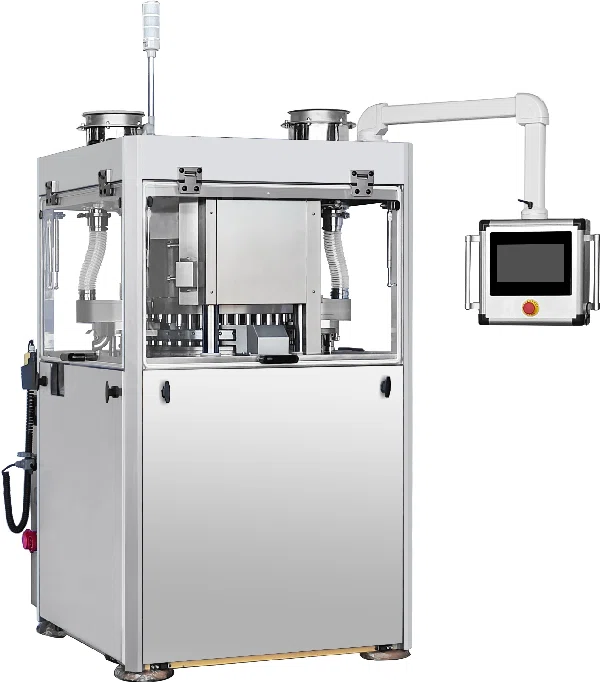
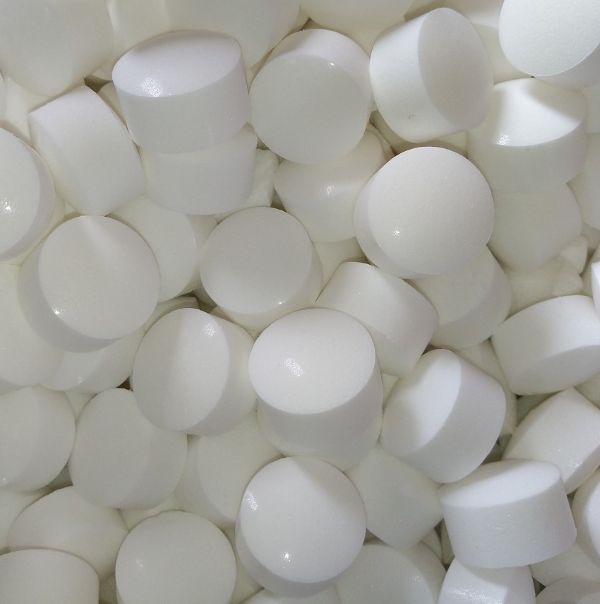
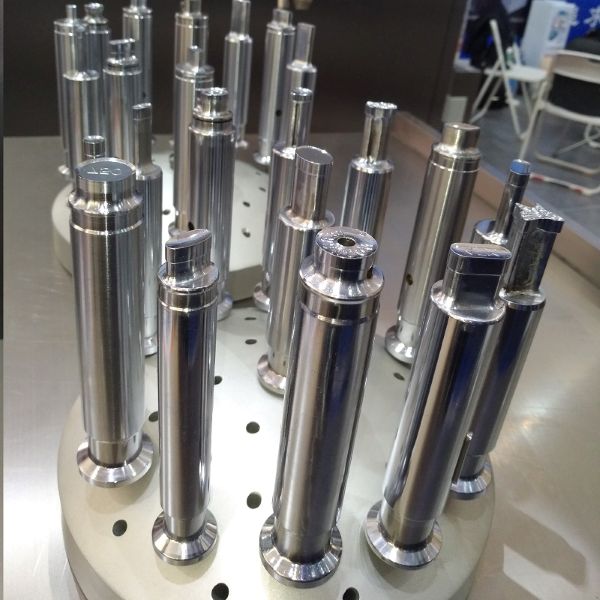
As professional manufacturer of tablet press machines and tablet press punch and dies, we have accumulated rich experience on salt tablet press mold production, for which we would like to share some exprience about the selection of the steel for the punch and dies.
Abstract
The selection of die and punch materials for salt tablet pressing operations presents a unique challenge in tool engineering, as the process concurrently involves high mechanical loads, severe abrasive wear, and exceptionally aggressive chemical attack from sodium chloride. Although both AISI 440C and Böhler M340 Isoplast are high-chromium stainless steels commonly considered for corrosive environment
s, their performance characteristics under salt compaction conditions diverge substantially. This article provides a technical comparison of their metallurgical properties, corrosion resistance, mechanical toughness, and surface finishing capability, with the objective of establishing a rational basis for material choice in high-throughput industrial production.
1. Introduction
In the production of salt-based tablets—ranging from water softener blocks to dishwasher detergent pellets—tooling materials are subjected to a triad of destructive factors: high compressive stresses required for adequate densification, two-body and three-body abrasion from crystalline salt particles, and localized pitting corrosion induced by chloride ions. While conventional stainless steels offer a baseline level of protection, the synergistic effect of these mechanisms often leads to premature tool failure, manifested as edge chipping, surface pitting, adhesive pickup (sticking), and loss of dimensional accuracy. A systematic comparison between two candidate alloys—AISI 440C, a martensitic stainless steel produced by conventional casting, and Böhler M340 Isoplast, a proprietary grade refined via electroslag remelting (ESR)—reveals significant differences that directly influence mold service life and production efficiency.
2. Comparative Material Characteristics
A side-by-side evaluation of key performance indicators is summarized below. The parameters encompass manufacturing history, microstructural morphology, corrosion-related metrics, mechanical integrity, and surface engineering potential.
| Parameter | AISI 440C | Böhler M340 Isoplast | Preferred Grade |
| Production Route | Conventional air melting + electroslag refining (basic) | Electroslag remelting (ESR / Isoplast process) | M340 |
| Microstructure | Coarse, segregated carbide network with non-uniform distribution | Fine, homogeneous carbide dispersion with high isotropy | M340 |
| Chromium Content (wt.%) | ~17.0 | ~17.3 | Comparable |
| Molybdenum Addition | None (trace only) | ~1.1% (deliberate alloying) | M340 |
| Pitting Resistance Equivalent (PREN) | Moderate (~17–18) | Elevated (~22–24) | M340 |
| Relative Toughness | Lower; susceptible to micro-fracture under cyclic loading | Enhanced; improved resistance to crack initiation and propagation | M340 |
| Attainable Surface Finish | Moderate (Ra ~0.05–0.10 µm after skilled polishing) | Superior (mirror-like finish, Ra ≤ 0.02 µm achievable) | M340 |
| Relative Material Cost | Baseline (approx. 1.8× of standard tool steel) | Premium (approx. 2.5× of standard tool steel) | 440C (economically) |
3. Technical Rationale for M340 Superiority
3.1 Pitting Corrosion Mitigation
Chloride ions from sodium chloride are notorious for breaching passive oxide films on stainless steel surfaces, initiating metastable pitting that rapidly evolves into macroscopic cavities. While AISI 440C relies solely on chromium for passivation, M340 incorporates molybdenum—a potent enhancer of passive film stability and repassivation kinetics. The resultant increase in PREN (Pitting Resistance Equivalent Number) effectively raises the threshold potential for pit nucleation, thereby preserving mold surface integrity in the presence of hygroscopic salt residues and intermittent condensation.
3.2 Microstructural Refinement via ESR
The conventional melting route for 440C yields primary carbides (primarily M₂₃C₆ and M₇C₃) that grow into large, angular clusters during solidification. These coarse particles act as stress raisers and, under the high uniaxial pressures typical of salt compaction (often exceeding 500 MPa), may detach or fracture, contributing to three-body abrasion and accelerated wear. In contrast, the ESR process employed for M340 ensures rapid, directional solidification with minimal segregation, producing a refined, isotropic microstructure. This uniform distribution of hard phases enhances both abrasive wear resistance and resistance to incipient chipping.
3.3 Surface Quality and Anti-Sticking Performance
Salt crystals exhibit a strong tendency toward mechanical interlocking and adhesive cold-welding under compaction, which increases ejection forces and promotes tablet defects such as capping or laminating. The fine-grained, inclusion-free matrix of M340 permits ultra-high-gloss polishing to a mirror finish. Such a low-friction surface reduces the interfacial shear stress during tablet ejection, minimizes salt adhesion, and enables consistent weight and hardness control over extended production runs.
3.4 Mechanical Robustness Under Cyclic Compression
Despite both grades being heat-treatable to comparable hardness levels (58–60 HRC), 440C’s heterogeneous carbide population compromises its fracture toughness, particularly in thin-walled die sections or punch tips subjected to eccentric loading. M340, owing to its clean grain boundaries and absence of coarse brittle phases, achieves a more favorable combination of hardness and ductility. This translates directly into reduced incidence of catastrophic cracking and longer mean time between tool changes.
4. Practical Application Guidelines
For continuous, high-volume manufacturing environments—such as those producing domestic water-softener tablets or automatic dishwasher pellets—the elevated upfront cost of M340 Isoplast is readily amortized through decreased production interruptions, extended tooling life (often by a factor of 3–5 relative to 440C), and lower rejection rates due to surface defects. Conversely, AISI 440C may remain a viable option for low-speed pilot trials, small-batch custom pressing, or scenarios where capital expenditure is the overriding constraint and tool replacement frequency is not a primary concern.
5. Conclusion
The selection of mold steel for salt tablet pressing must be governed by a holistic assessment of corrosion, abrasion, and mechanical fatigue. While both AISI 440C and M340 Isoplast belong to the high-chromium stainless family, the latter’s molybdenum-alloyed chemistry, ESR-refined microstructure, and superior polishability confer decisive advantages in demanding industrial settings. For operations aiming to maximize uptime, product quality, and long-term cost efficiency, M340 represents the technologically sound investment.
6. Further Inquiry
Should you require tailored recommendations regarding specific tablet geometries (e.g., large industrial briquettes vs. small cylindrical pellets) or the potential synergy with surface engineering treatments such as chromium nitride (CrN) physical vapor deposition (PVD) coatings, our technical team is prepared to provide application-specific simulation data and field case studies.